What We Repair
Commercial tile floors take a level of abuse that residential floors don't — constant foot traffic, rolling loads, cleaning chemicals, and maintenance schedules that don't always catch problems early. We diagnose and repair:
- Cracked or chipped porcelain and ceramic tile — individual tiles or larger areas impacted by point loads, dropped equipment, or subfloor movement
- Hollow or delaminated tile — tiles that sound hollow when tapped have lost adhesion to the substrate; these are at risk of cracking or lifting underfoot
- Loose or lifted tile — tiles that shift or rock when walked on; a liability and maintenance issue
- Failed grout joints — crumbling, missing, or deeply stained grout that compromises the floor's integrity and appearance
- Deteriorated silicone caulking — movement joints at wall-floor junctions, column bases, and transitions that have cracked, moulded, or separated
- Water-damaged substrate areas — where moisture has infiltrated through failed grout or caulking and compromised the setting bed or subfloor below
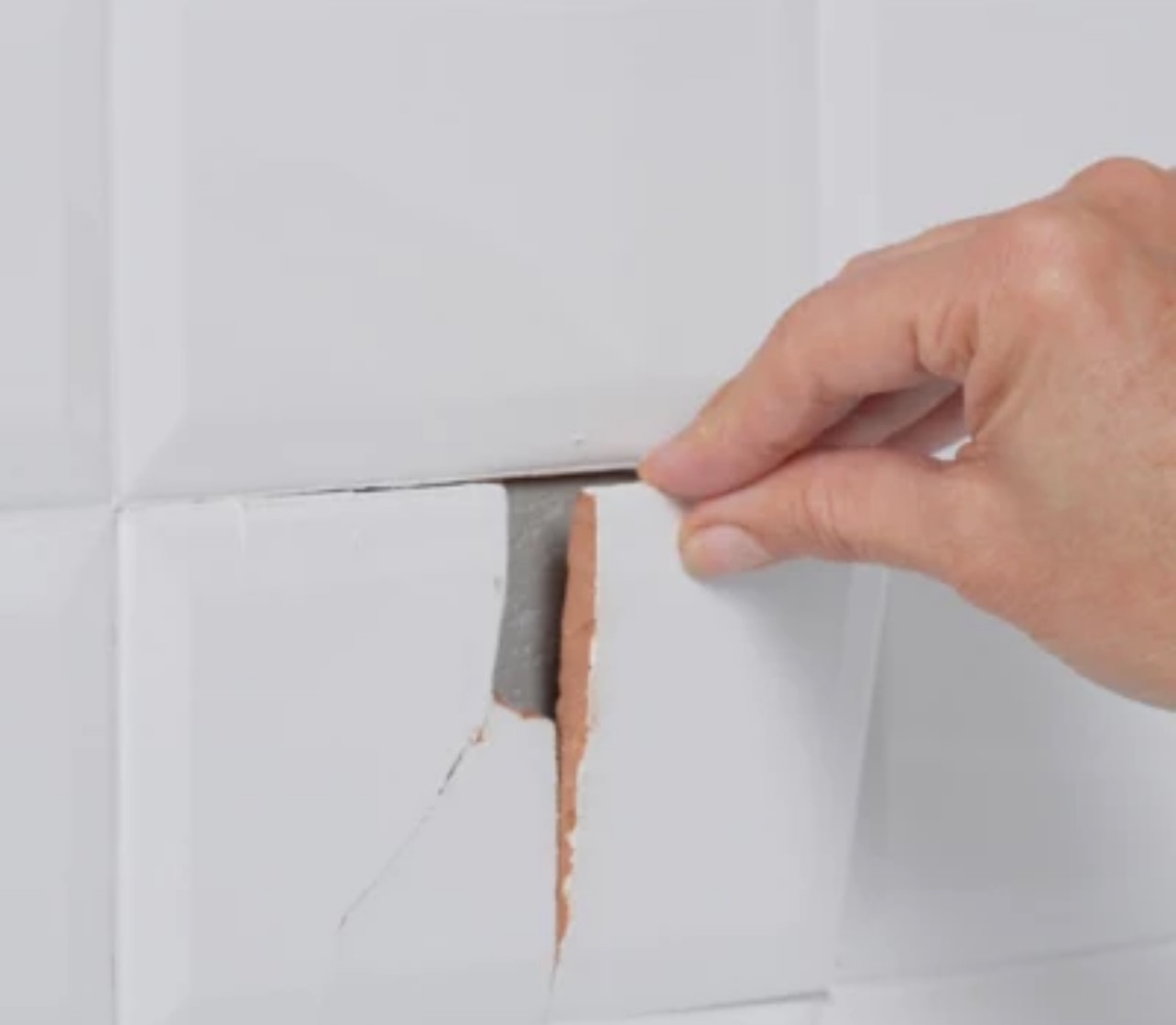
Why Diagnosis Matters
The most common commercial tile repair failure is treating the symptom without addressing the cause. A cracked tile is replaced — and six months later the new tile cracks in the same location. The crack was a symptom of subfloor deflection, a missing movement joint, or a hollow bond that was never properly filled. Replacing the tile without fixing what caused it is a temporary repair at best.
Before any repair work begins, we assess:
- Substrate integrity: is the concrete, plywood, or backer board in good condition, or is there deterioration beneath the tile?
- Bond coverage: when removing a tile, we check how much of the tile back is actually bonded — poor coverage (under 80% is a failure) indicates the original installation was substandard
- Movement joint placement: large tile installations require movement joints at defined intervals and at all transitions; their absence or incorrect placement is a common cause of cracking
- Waterproofing: in wet areas, we verify whether waterproofing exists and whether it has been breached
A correct repair fixes the underlying issue first. That's what makes it last.
Grout and Caulking Color Matching
Color matching on existing commercial tile floors is one of the more challenging aspects of tile repair. Grout fades, yellows, and shifts colour over years of cleaning and traffic. Manufacturer colour charts don't always reflect how a product looks after several years in service.
We bring grout samples on-site, wet them to simulate the cured colour, and compare against the existing grout under the space's actual lighting. We can get close on most projects — a perfect match across aged and new grout is rarely achievable without regrouting the entire floor. We discuss expectations honestly before the work begins.
Silicone caulking color matching follows the same process. Movement joints at floor-wall transitions need to match or be visually acceptable in context — this is especially important in high-visibility retail and hospitality environments.
HEPA Dust Extraction on Commercial Sites
Cutting, grinding, and removing tile generates silica dust — fine particles of crystalline silica from the tile and mortar. Silica dust at occupational exposure levels is a serious health hazard; in a commercial building with occupants present, it's also a liability.
We use HEPA-filtered dust extraction on all commercial work. Our PIKUS bridge saw is fitted with water suppression for wet cutting. Angle grinders used for grout removal are connected to HEPA vacuums with the appropriate attachment shrouds. This is not optional on commercial sites — it's standard practice for every job.
Scheduling Around Your Operations
Commercial tile repair doesn't have to shut down your business. We offer:
- Evening and weekend scheduling for retail, restaurant, and office environments that can't accommodate daytime work
- Phased repair — dividing a larger repair area into sections that can cure overnight, so the floor is usable each day before work resumes
- Fast-cure materials — rapid-set mortars and grouts allow tile repairs to be walked on in as little as 4 hours when scheduling is tight
We discuss your operational constraints before scheduling begins and build the repair plan around your business's needs.